
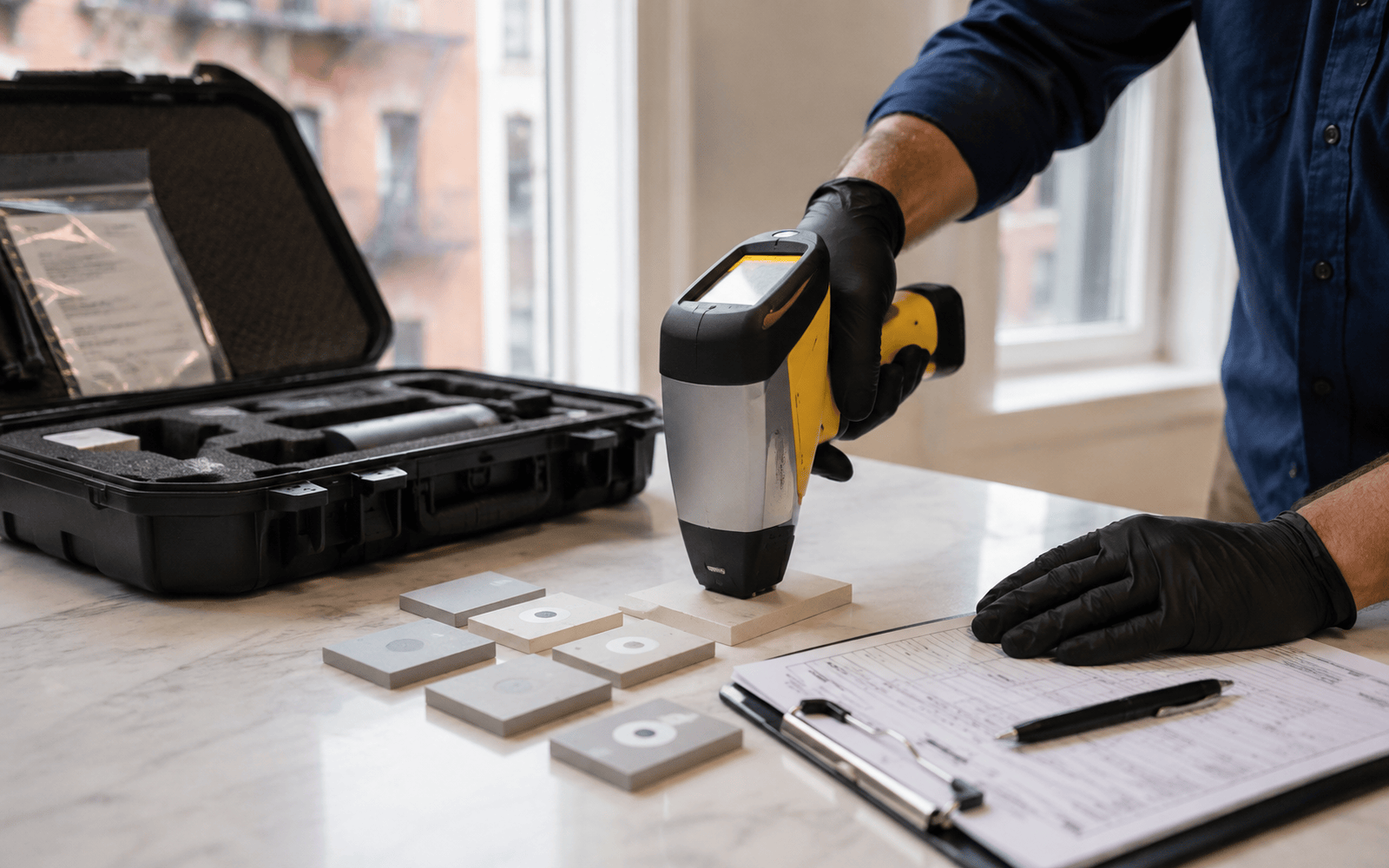
What calibration and quality checks mean
XRF analyzers are precision instruments. Owners do not need to understand every technical detail, but they should expect the inspection firm to verify that the equipment is performing properly. For scope and scheduling questions, the inspection services page gives a practical overview.
Two ideas are often confused
- Calibration relates to the instrument’s setup and manufacturer or service controls.
- Quality checks are routine checks used before or during field work to confirm the analyzer is reading as expected.
Both matter. A report is stronger when the firm can show that the instrument was maintained and checked according to its procedures.
Why quality checks matter in the field
NYC inspections often involve many readings in a short access window. A quality check helps confirm that the analyzer is performing consistently before the inspector relies on the data.
Field checks can support
- Instrument readiness.
- Consistency between projects.
- Detection of equipment problems before many readings are taken.
- More defensible reporting for owners, agencies, and reviewers.
What owners should see in a good report
The final report should not drown the owner in technical data, but it should show enough information to support trust in the results. A related guide on this site covers XRF Analyzers for NYC Lead Paint Inspections. Another useful page explains What Is a Mandatory Apartment Inspection or Laser Test in NYC?. Federal background is available in EPA inspection guidance.
Look for
- Instrument make, model, or serial information.
- Inspector name and inspection date.
- Component-by-component readings.
- Clear result classifications.
- Notes on inaccessible areas or unusual conditions.
- Reference to quality control checks when included in the firm’s reporting format.
How to avoid weak XRF records
Weak reports create problems later. Owners should avoid relying on records that cannot be tied to a specific room, component, inspector, and instrument. Additional background is available from NIST calibration services.
Red flags
- Only a summary with no component detail.
- No inspection date.
- No unit or room labels.
- No instrument information.
- No explanation of missed areas.
- Results that cannot be matched to the property layout.