
Why lab accreditation matters
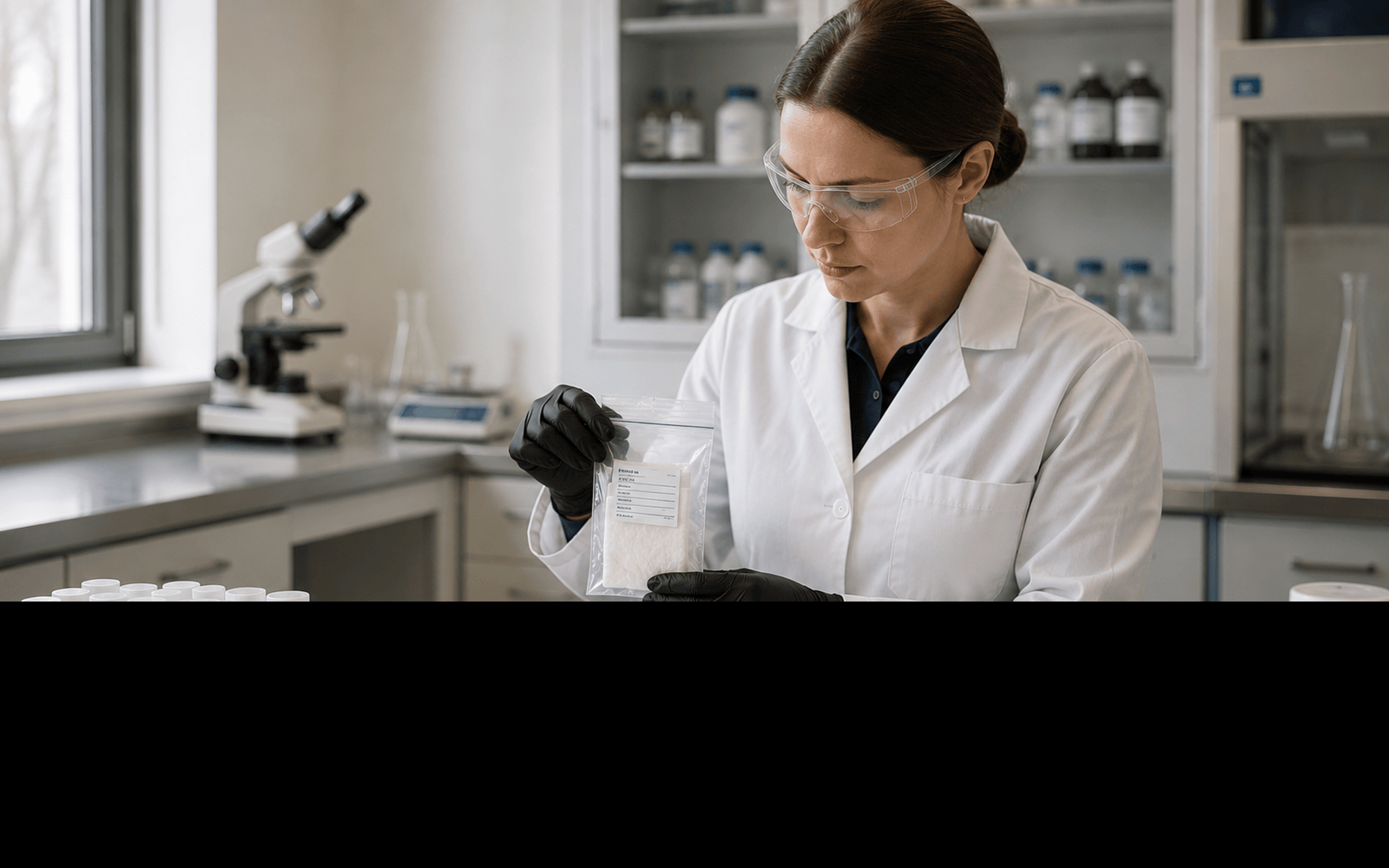
Lead dust wipe, paint chip, and soil samples should be analyzed by qualified laboratories when results will be used for compliance, clearance, or decision-making. Accreditation helps show that the lab follows recognized quality systems for the type of testing requested. For local help, our team can help you sort out the next step.
Do not check only the lab name
The specific sample type must be within the lab’s accredited scope. A lab may be qualified for one type of analysis but not another.
Confirm before sending samples
- Lead in dust wipes.
- Lead in paint chips.
- Lead in soil.
- Current accreditation status.
- Current scope of accreditation.
- Reporting format and turnaround time.
How lab results connect to field work
A lab can only report on the sample it receives. If the field record is vague, the final result may be hard to use.
Each sample should connect to
- Building address.
- Unit, room, and surface.
- Sample ID.
- Measured area for dust wipes.
- Collection date.
- Sampler name.
- Chain-of-custody form.
A result labeled only “kitchen” is weak. A result tied to “123 Main Street, Unit 2B, kitchen floor, 1 square foot, Sample DW-03” is much stronger. A related guide on this site covers Dust Wipe Sampling Kits for NYC Lead Clearance and Investigations. Another useful page explains What to Do If Lead Remediation Was Done Badly in NYC.
Nearby accredited labs to verify in NYC
The following are examples of nearby laboratories or providers that publicly list AIHA-LAP, ELLAP, NLLAP, or related lead-analysis credentials. Accreditation scopes can change, so owners should verify the current scope directly before relying on a lab for dust wipe, paint chip, or soil analysis. Lab accreditation can be checked with AIHA accredited lab search.
Examples to check
- EMSL Analytical, Inc. — NYC / Long Island City laboratory. Public materials list AIHA LAP ELLAP accreditation and ELPAT participation for paint chips, soil, dust wipes, and air.
- Atlas Environmental Lab — 255 W 36th Street, Suite 1503, New York, NY. Public certificate materials list AIHA-LAP accreditation and lead wipe / paint scope information.
- NYC ENV Testing — NYC environmental testing provider. Public site describes an AIHA-LAP accredited lab and lead paint / dust wipe services.
What to ask any lab
- Are you currently accredited for lead in dust wipes?
- Are you recognized through the applicable lead laboratory program for this sample type?
- Can you provide the current scope and certificate?
- What sample container, form, and shipping instructions do you require?
- How will results be reported for NYC compliance records?
Why chain of custody matters
Chain-of-custody documentation connects the field sample to the lab report. This protects the usefulness of the result if HPD, a lender, an attorney, or another reviewer asks how the sample was handled. Federal background is available in EPA NLLAP program.
A clean chain of custody includes
- Sample IDs that match the field log.
- Requested analysis.
- Sampler information.
- Transfer or delivery details.
- Lab receipt information.
- Final report number.
How NYC LeadSafe Experts uses lab records
NYC LeadSafe Experts treats sampling as a documentation process. Labels, field logs, chain-of-custody records, and lab reports should work together so the owner can understand the final result without reconstructing the project later.