
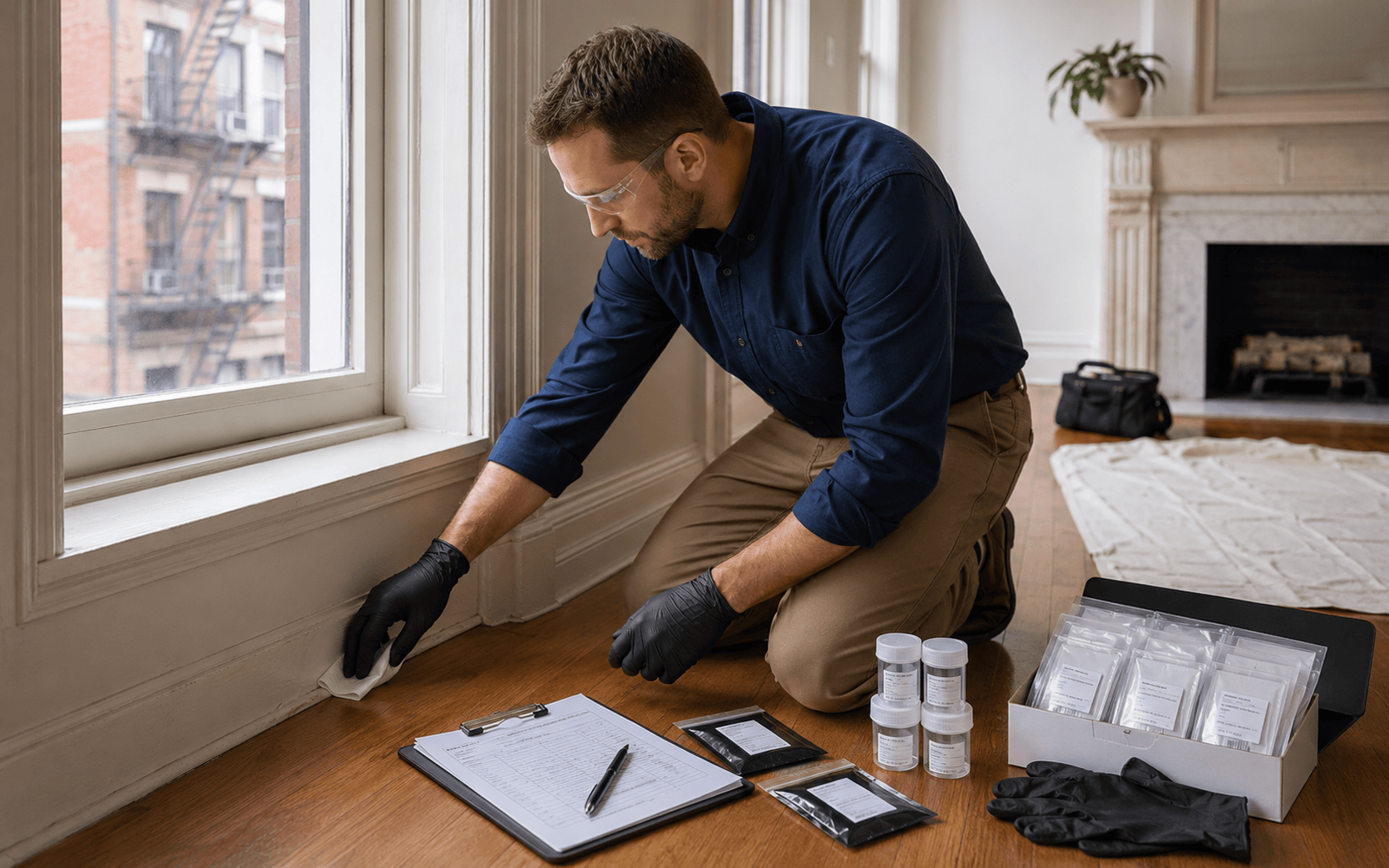
What dust wipe sampling measures
XRF testing checks painted components. Dust wipe sampling checks settled dust on surfaces such as floors, window sills, and window troughs. For scope and scheduling questions, the inspection services page gives a practical overview.
Why dust matters
Lead dust can be hard to see. A room may look clean but still contain lead dust after paint deterioration, sanding, scraping, demolition, or poor cleanup.
Dust wipe sampling is often used
- After lead hazard control work.
- After renovation work that disturbed painted surfaces.
- During clearance testing.
- During tenant exposure concerns.
- As part of a broader environmental investigation.
What a professional kit should include
A dust wipe kit is more than a wipe. It should support clean collection, clear labeling, and reliable lab reporting.
Typical kit items
- Approved wipes.
- Templates or measuring tools.
- Sample tubes or containers.
- Labels and sample IDs.
- Gloves.
- Field log sheets.
- Chain-of-custody forms.
- Packaging for delivery or shipment to the lab.
Every sample must be traceable. A lab result is only useful if the owner can match it to the exact room, surface, and measured area. A related guide on this site covers AIHA-Accredited Labs for Lead Dust Wipe Analysis. Another useful page explains What to Do If Lead Remediation Was Done Badly in NYC.
How sampling should be documented
Sampling technique and records matter as much as the kit itself. Poor labels or sloppy field logs can make accurate lab results difficult to use. Federal background is available in EPA NLLAP lab list.
A good field log includes
- Building address.
- Unit and room.
- Surface type, such as floor, sill, or trough.
- Measured area.
- Sample ID.
- Collection date and sampler.
- Notes on site conditions.
Labs and chain of custody
Samples should be sent to a qualified laboratory for the requested analysis. Chain-of-custody records connect the sample collected in the apartment to the final lab report. Federal background is available in EPA laboratory accreditation rules.
The chain of custody should show
- Who collected the sample.
- When and where it was collected.
- What analysis was requested.
- How the sample was transferred.
- When the lab received it.
- Which final report belongs to the sample.
Planning dust wipe work in NYC
Before sampling, decide why samples are being collected and how results will be used. Random sampling without a clear purpose can create records that are hard to interpret.
Prepare before the visit
- Identify rooms and surfaces to sample.
- Confirm whether clearance, investigation, or planning is the purpose.
- Coordinate access with tenants or the superintendent.
- Gather prior XRF reports and repair records.
- Decide who will receive the lab report.